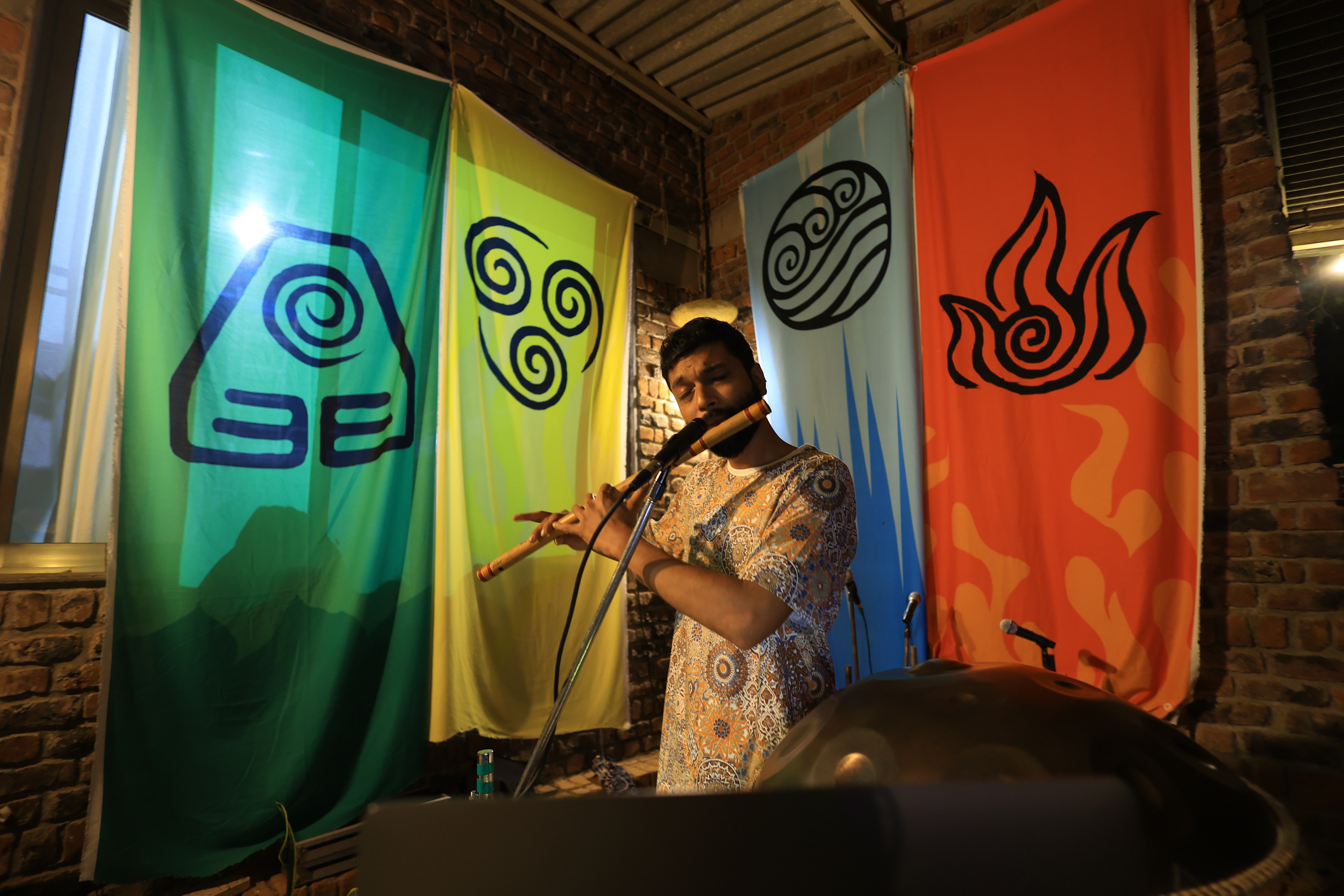
Himalayan Flow Gathering is a multi-day festival that brings together flow arts, movement practices, meditative sessions, and live music within a nature-based setting.
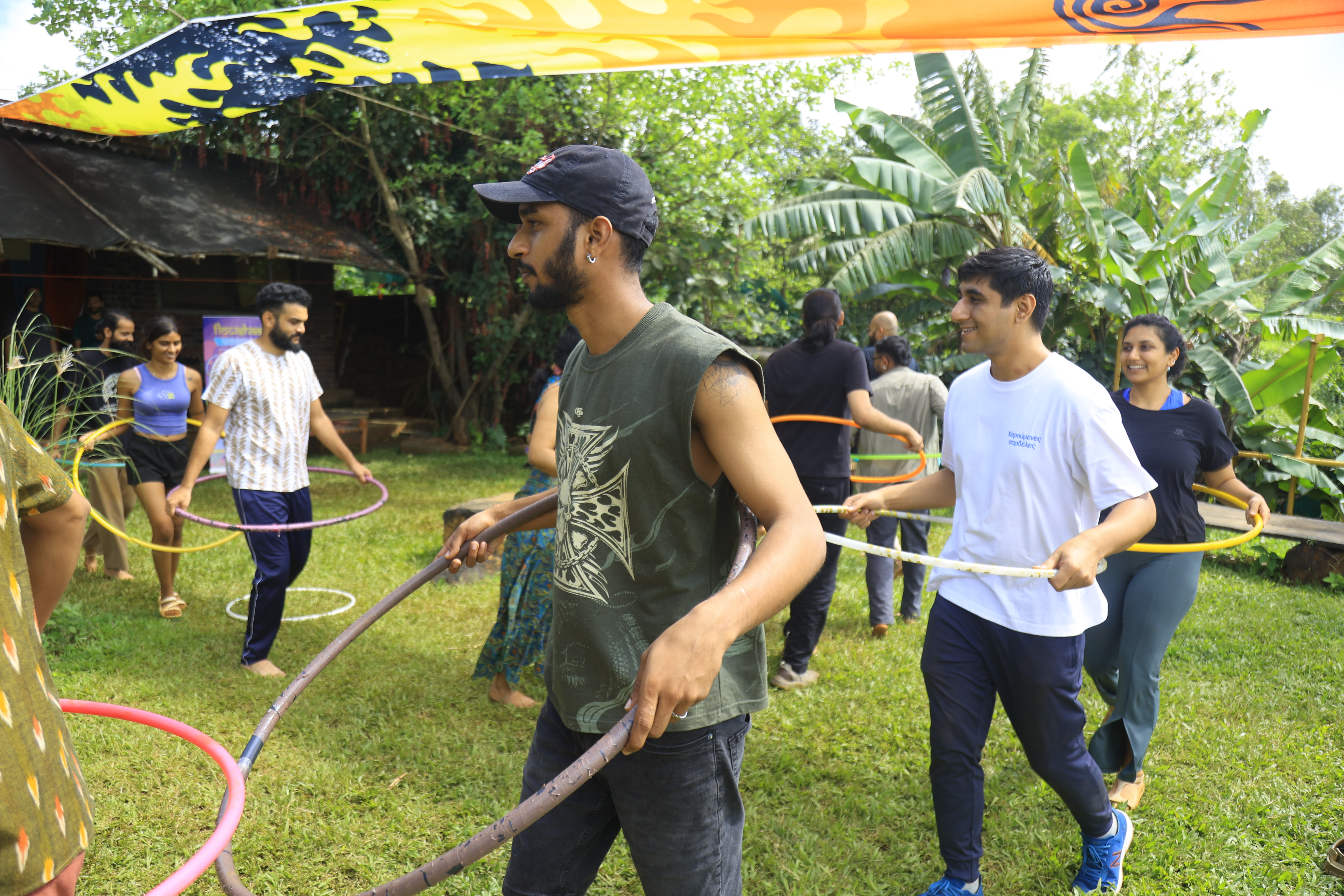
The festival’s line-up includes workshops, performances, and guided sessions led by practitioners from India and international flow arts communities. Programming spans disciplines such as poi, juggling, movement exploration, and meditation, alongside live and organic music performances that accompany evening sessions.
Himalayan Flow Gathering takes place in a natural environment, with a format that combines structured workshops and open practice spaces. Participants engage in skill-based learning, collaborative sessions, and informal exchanges across the duration of the event.
Through its programming, the festival creates a shared space for practitioners and participants to explore movement, coordination, and creative expression within a community-led setting.
See more Dance festivals here.
How to reach Shimla
1. By Air:The nearest airport is Jubbarhatti Airport, located about 23 km from Shimla. It has limited flight connectivity. For more frequent options, travelers can fly to Chandigarh Airport (around 120 km away), which is well connected to major Indian cities. From the airport, taxis and buses are easily available to reach Shimla.
2. By Rail:
Shimla is connected to Kalka (96 kms) on Meter Gauge and it takes around 6 Hrs from KALKA to reach SHIMLA. There are 3-4 trains daily from Kalka to Shimla and vice-versa. Shivalik Express is luxury Deluxe Train on this route with less halts and pantry facility. One can also travel through Rail car (one of its kind mainly running on this route in india only). The overnight Kalka Mail from Delhi reaches Kalka in the early morning and that is the time to catch connecting trains on the splendid narrow-gauge train to Shimla. There are 103 tunnels on the route with longest being 1.2 K.M. long
3. By Road:
Shimla is well connected by road to major cities in North India. Regular public and private buses, including deluxe and Volvo services, operate from Delhi, Chandigarh, and nearby towns. The road journey from Chandigarh takes about 3–4 hours, making it one of the most convenient ways to reach Shimla.
Source: Government of Himachal Pradesh

1. Light woollens or layered clothing, as days are pleasant but mornings and evenings can still be cool.
2. Comfortable walking shoes with good grip, especially for exploring hilly terrain and steep paths.
3. Sunscreen, sunglasses, and a hat or cap, as the mountain sun can be quite strong during the day.
4. A sturdy water bottle, basic medicines, and cash/cards for staying hydrated and managing essentials on the go.








- Festivals From India is not associated with ticketing, merchandising and refund matters of any Festival organised by Festival Organisers. Festivals From India shall not be responsible for any conflict between a User and Festival Organiser in matters related to ticketing, merchandising and refund matters of any Festival.
- The date / timings / artist line-up of any Festival may change as per the Festival Organiser’s discretion and Festivals From India has no control over such changes.
- For the registration of a Festival, the Users will be redirected to the website of such Festival or to any third party website under the discretion / arrangement of Festival Organisers. Once a User has completed their registration for a Festival, they will receive their registration confirmation by email from the Festival Organisers or the third party websites where the event registration is hosted. Users are advised to enter their valid email correctly on the registration form. Users may also check their junk / spam email box in case any of their Festival email(s) are caught by spam filters.
- Events are marked COVID safe based on self-declarations made by the festival organiser regarding compliance with government/local authority COVID-19 protocols. Festivals From India shall have no liability as to the actual compliance with COVID-19 protocols.
- Users may face interruptions during the course of the live stream due to internet connectivity issues. Neither Festivals From India nor the Festival Organiser is responsible for such interruptions.
- The Digital Festival / Event may have interactive elements and will involve participation from the Users.
newsletter!





 ||||
||||






Get in touch on hello@festivalsfromindia.com