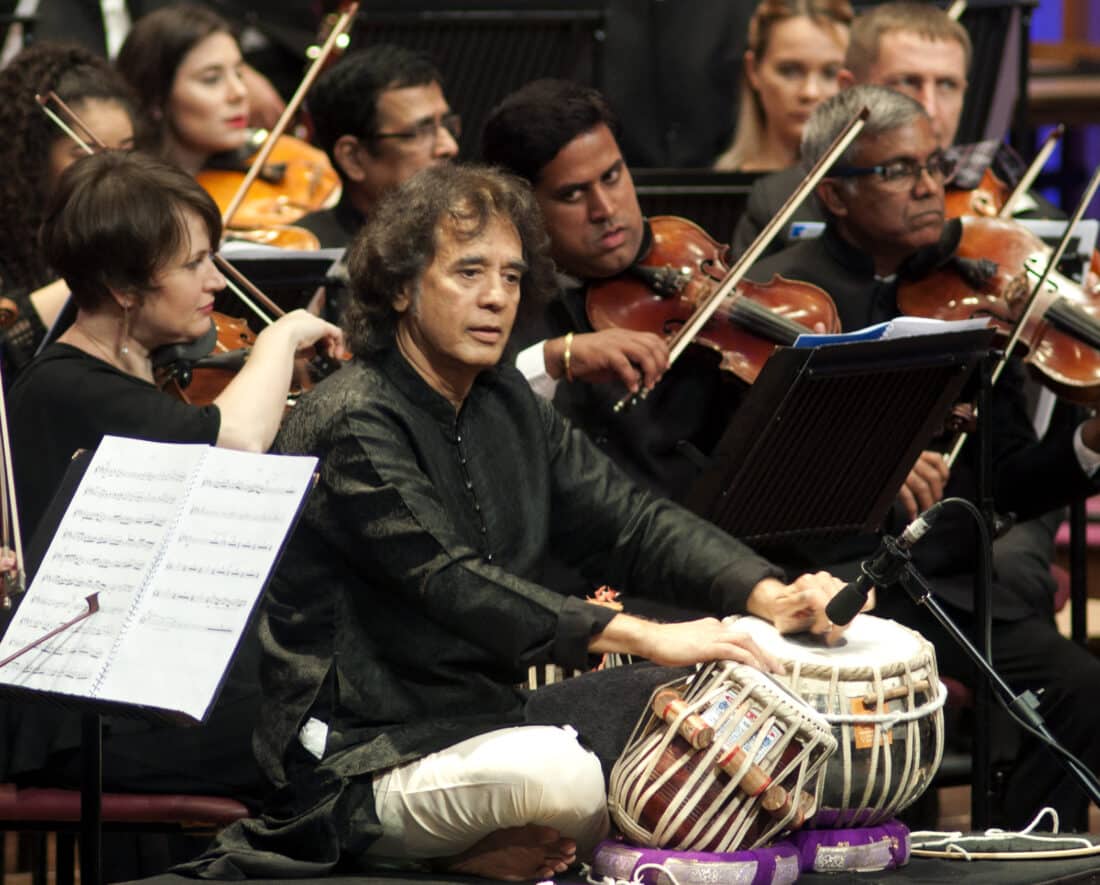
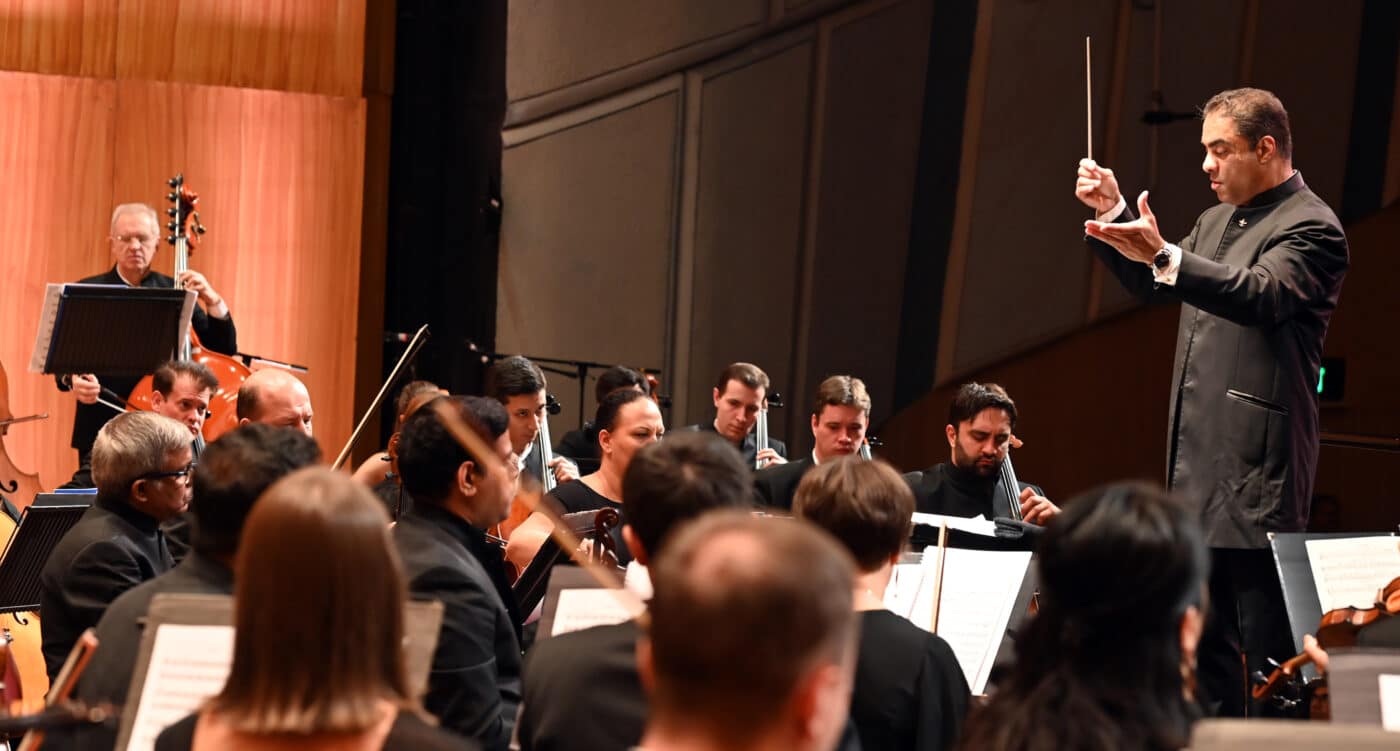
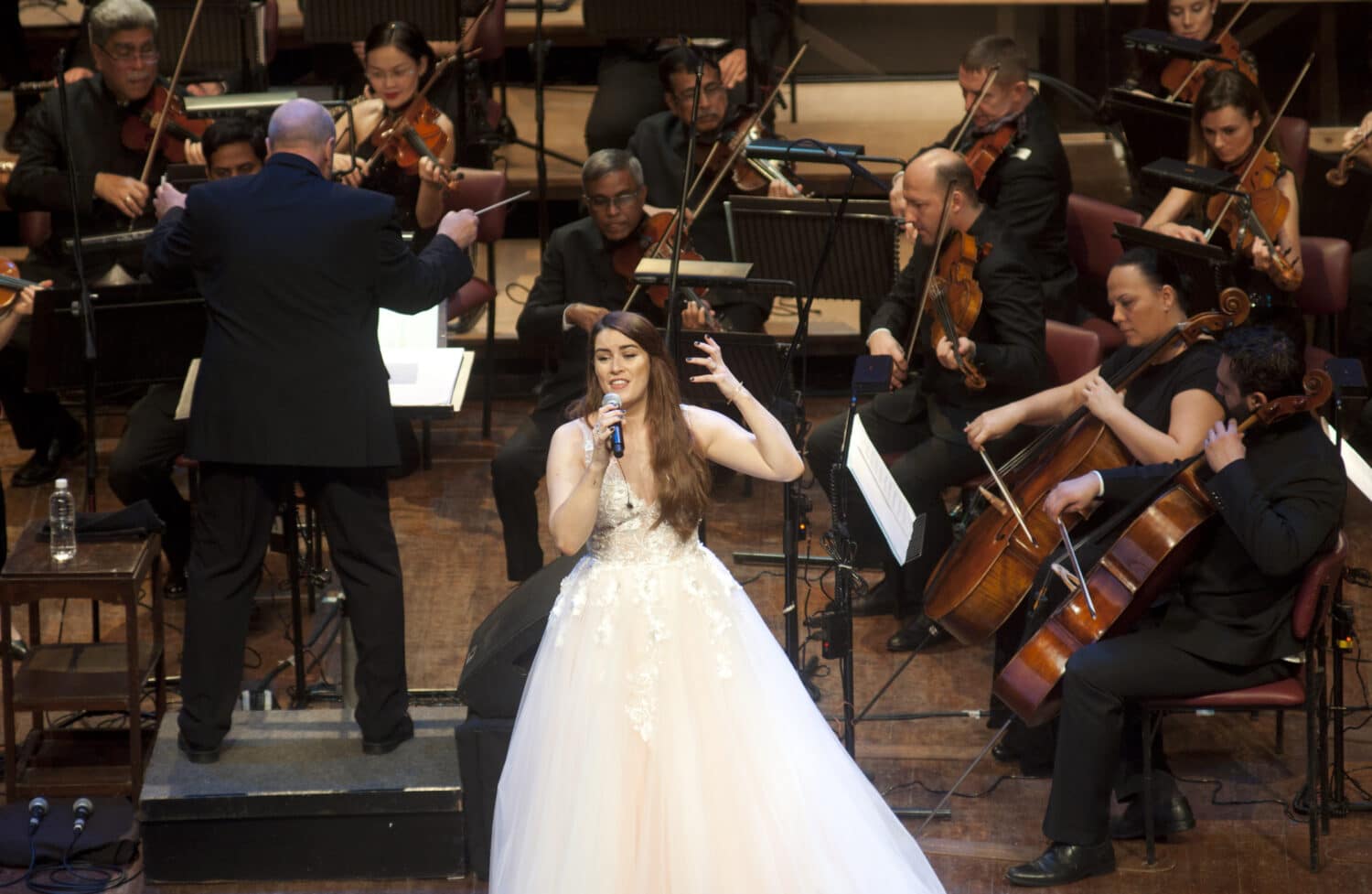
The Symphony Orchestra of India (SOI), based at the National Centre for the Performing Arts (NCPA), Mumbai, is India’s first and only professional orchestra. It was founded in 2006 by NCPA Chairman Khushroo N. Suntook and internationally-renowned violin virtuoso Marat Bisengaliev, who serves as the Orchestra’s Music Director.
Every year, the Symphony Orchestra of India (SOI) presents two seasons of symphony orchestra concerts, the Autumn season in September and the Spring season in February. Each includes symphonic concerts as well as recitals, and features renowned conductors and soloists.
Past editions of the festival have been held both internationally and in India and has featured large-scale productions including fully-staged operas, besides the mainstays of the symphonic repertoire. In 2017, the SOI premiered a highly-acclaimed, innovative new production of La Bohème, conducted by Carlo Rizzi, featuring an international star cast. In February 2019, the SOI embarked on a six-concert tour to the United Kingdom, performing to delighted audiences in prestigious venues in London, Birmingham, Cardiff, Guildford, and Edinburgh, and garnering rave reviews.
The Autumn 2022 season of SOI – and twenty-ninth so far – comprised four symphonic concerts, four recitals and three stagings of Johann Strauss II’s operetta Die Fledermaus in collaboration with the Hungarian State Opera. The season also featured music as wide ranging as Beethoven’s triple concerto, pieces from Prokofiev’s ballet Romeo and Juliet and Leonard Bernstein’s dances from the Broadway musical West Side Story. Among the acclaimed international artists making their India debuts were conductors Alpesh Chauhan and Richard Farnes from the UK; pianists Benjamin Grosvenor, Pavel Kolesnikov and Jean-Frédéric Neuberger from the UK, Russia and France respectively; cellist Henri Demarquette from France, violinist Sayaka Shoji from Japan and French horn player Ben Goldscheider from the UK.
The SOI Spring 2023 Season comprised four symphonic concerts and three incredible recitals, including Sir Karl Jenkins’ Requiem, an eclectic repertoire featuring music from Weber’s opera Der Freischütz, symphonies by Brahms, Tchaikovsky and Dvořák, Beethoven’s Leonore Overture No. 3, and more.
Check out more music festivals here.
How to Reach Mumbai
1. By Air: Chhatrapati Shivaji International Airport, formerly known as Sahar International Airport, is the primary international airport serving the Mumbai metropolitan area. It is situated about 30 km from the main Chhatrapati Shivaji Terminus (CST) train station. Mumbai Chhatrapati Shivaji has two terminals. Terminal 1, or the domestic terminal, was the old airport referred to as Santa Cruz Airport, and some locals still use this name. Terminal 2, or the international terminal, replaced the old terminal 2, formerly known as Sahar Airport. The Santa Cruz Domestic Airport is about 4.5 km from the international airport. There are regular direct flights to Mumbai from most major cities in India and across the world. Buses and cabs are easily available from the airport to reach desired destinations.
2. By Rail: Mumbai is very well connected to rest of India by train. The Chhatrapati Shivaji Terminus is the most popular station in Mumbai. Trains to Mumbai are available from all major railway stations in India. Some important Mumbai trains of note are the Mumbai Rajdhani, Mumbai Duronto, and Konkan Kanya Express.
3. By Road: Mumbai is well-connected with national highways and expressways. Visiting by bus is economical for individual tourists. Government-run and private buses operate daily services. Travelling to Mumbai by car is a common choice made by travellers, and hailing a cab or hiring a private car is an efficient way of exploring the city.
Source: Mumbaicity.gov.in


1. Light cotton clothes to beat the humidity.
2. A sturdy water bottle, if the festival has refillable water stations.
3. COVID packs: Hand sanitiser, extra masks and a copy of your vaccination certificate at the things you should keep hand









Nariman Point
Mumbai
400021 Maharashtra
- Festivals From India is not associated with ticketing, merchandising and refund matters of any Festival organised by Festival Organisers. Festivals From India shall not be responsible for any conflict between a User and Festival Organiser in matters related to ticketing, merchandising and refund matters of any Festival.
- The date / timings / artist line-up of any Festival may change as per the Festival Organiser’s discretion and Festivals From India has no control over such changes.
- For the registration of a Festival, the Users will be redirected to the website of such Festival or to any third party website under the discretion / arrangement of Festival Organisers. Once a User has completed their registration for a Festival, they will receive their registration confirmation by email from the Festival Organisers or the third party websites where the event registration is hosted. Users are advised to enter their valid email correctly on the registration form. Users may also check their junk / spam email box in case any of their Festival email(s) are caught by spam filters.
- Events are marked COVID safe based on self-declarations made by the festival organiser regarding compliance with government/local authority COVID-19 protocols. Festivals From India shall have no liability as to the actual compliance with COVID-19 protocols.
- Users may face interruptions during the course of the live stream due to internet connectivity issues. Neither Festivals From India nor the Festival Organiser is responsible for such interruptions.
- The Digital Festival / Event may have interactive elements and will involve participation from the Users.
newsletter!





 ||||
||||






Get in touch on hello@festivalsfromindia.com