• Business of Handmade

    Topics

    Creative Careers
    Planning and Governance
    Reporting and Evaluation
    Sustainability

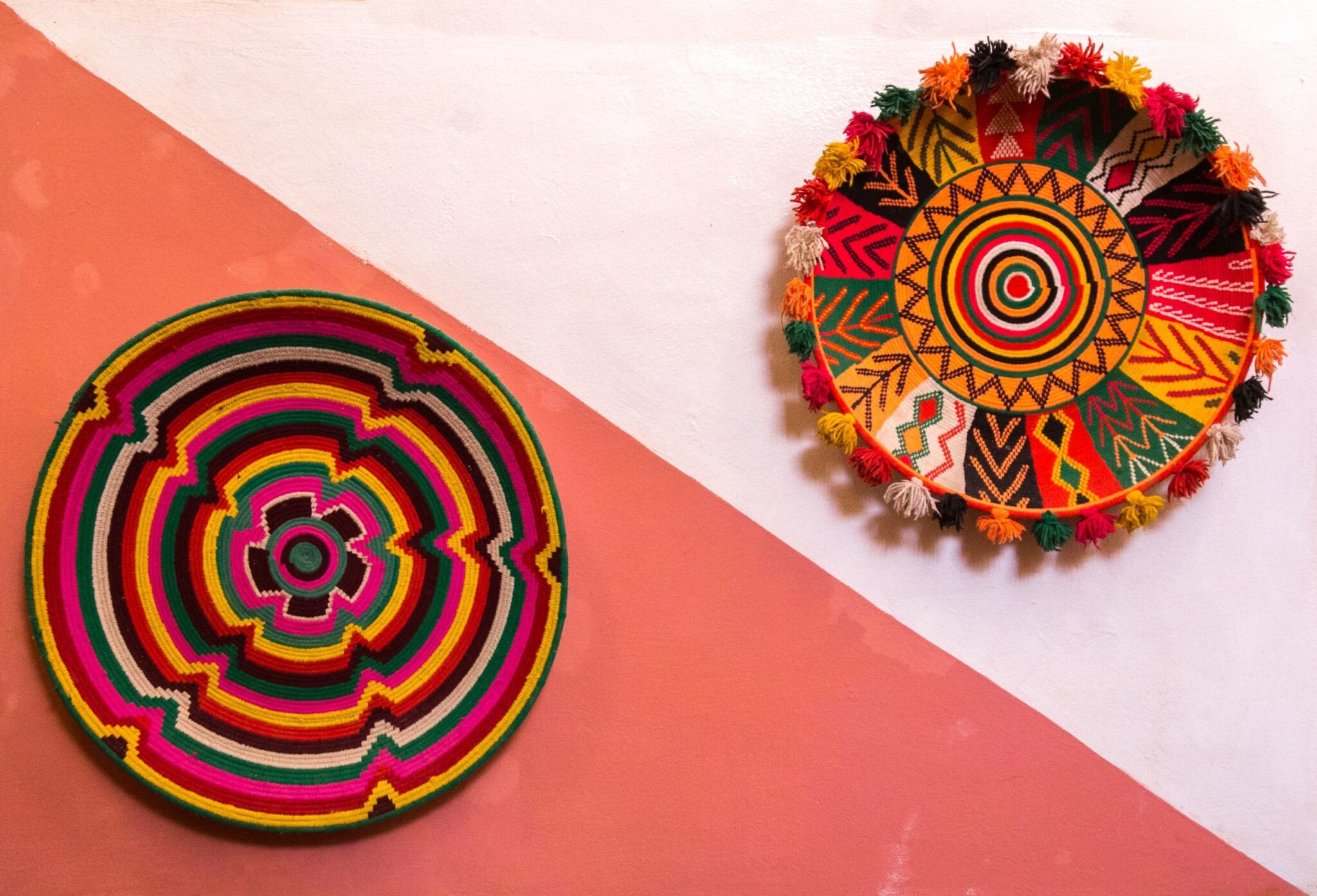
    Business of Handmade is a qualitative study that explores the relationship between the informal economy and the cultural economy through the eyes of 12 formal, craft-based enterprises of varying sizes, working with India’s artisan communities. These are Jaipur Rugs, Industree, rangSutra, Kadam + Kadam Haat, Commitment to Kashmir (CtoK), iTokri, Varnam Craft Collective, P-Tal, Xuta, Fab Creation, Neel Batik + Rainbow Textiles and Viko Ethnic Production. Through their stories, we engaged with the micro to medium size spectrum, diverse geographies, and varied approaches — for-profit, not-for-profit, social enterprise, design-led, artisan-led, and producer-owned. The study attempts to map the vast and often intertwined ecosystem of networks, customs, and conventions that shape how decisions are taken, resources organised, and profits shared. From scalable worker-ownership approaches, to co-created solutions addressing sustainable production, from models that ’emote’ to those that want to resist the “McDonaldization” (Ritzer, 1993) of craft, the report illustrates how entrepreneurial action bridges the gap between the formal and the informal. The research presents a uniquely Global South perspective into the nuances of informality, inclusion, language, gender, skill, etc. within creative cultures in the Global South. It also offers pathways to embed the logic and systems of informal creative cultures into more formal pipelines. Ultimately, Business of Handmade attempts to propose a conceptual reframing of inclusive business practices by drawing from the experience of India’s artisan sector.

    Lead Author: Priya Krishnamoorthy
    Co Authors: Dr. Anandana Kapur, Aparna Subramanyam
    Key Findings

    • The ‘New Formal’ is the new normal – An emergent hybrid approach that combines best practices of the ‘informal’ (cultural networks, behaviours) and the ‘formal’ (social protection, data, mobility) in India’s artisan economy. Informal modes of work among rural creative cultures inform business models of creative enterprises who adapt to local contexts to drive productivity, profits, and innovation.
    • Misunderstood and undermapped – Perception bias against handmade inhibits accurate and context-specific data collection from a diverse and massive community, relegating it further into informality.
    • One size does not fit all – Conversations around informality and creative economies, rooted in Global North contexts, pose barriers to organic inclusion of differently organised creative cultures and craft-led enterprises.
    • Decentralisation enables inclusion and scale – Enterprises in the artisan sector are differently motivated and cannot be reverse engineered to meet traditional definitions of growth. Scale is undoubtedly possible and is achieved via decentralised collectivisation.
    Catch us online
    #FestivalsFromIndia
    #FindYourFestival
    #FestivalsFromIndia
    #FindYourFestival
    Sign up for our
    newsletter!
    Get all things festivals, straight to your inbox.
    Email ID
    Select Interest
    I'm interested inarrow
    To get customised information please select your preferences
    Select Role
    Select your rolearrow
    By submitting your information, you consent to our Terms and Conditions , Privacy Policy , and Cookie Policy.
    Captcha

    Contact Us
    By submitting your information, you consent to our Terms and Conditions , Privacy Policy , and Cookie Policy.
    Festivals From India 2025| Terms of Service| Privacy Policy|Refund Policy| FAQs

    Months
    January
    February
    March
    April
    May
    June
    July
    August
    September
    October
    November
    December
    Sitemap
    Home
    Explore Festivals
    For Organisers
    Creative Careers
    About
    Genres
    EXPLORE ALL
    Places
    Arunachal Pradesh
    Assam
    Bihar
    Delhi NCR
    Goa
    EXPLORE ALL
    Contact Us
    By submitting your information, you consent to our Terms and Conditions , Privacy Policy , and Cookie Policy.

    Get in touch on hello@festivalsfromindia.com

    Festivals From India 2025
    Terms of Service
    Privacy Policy
    Refund Policy
    FAQs