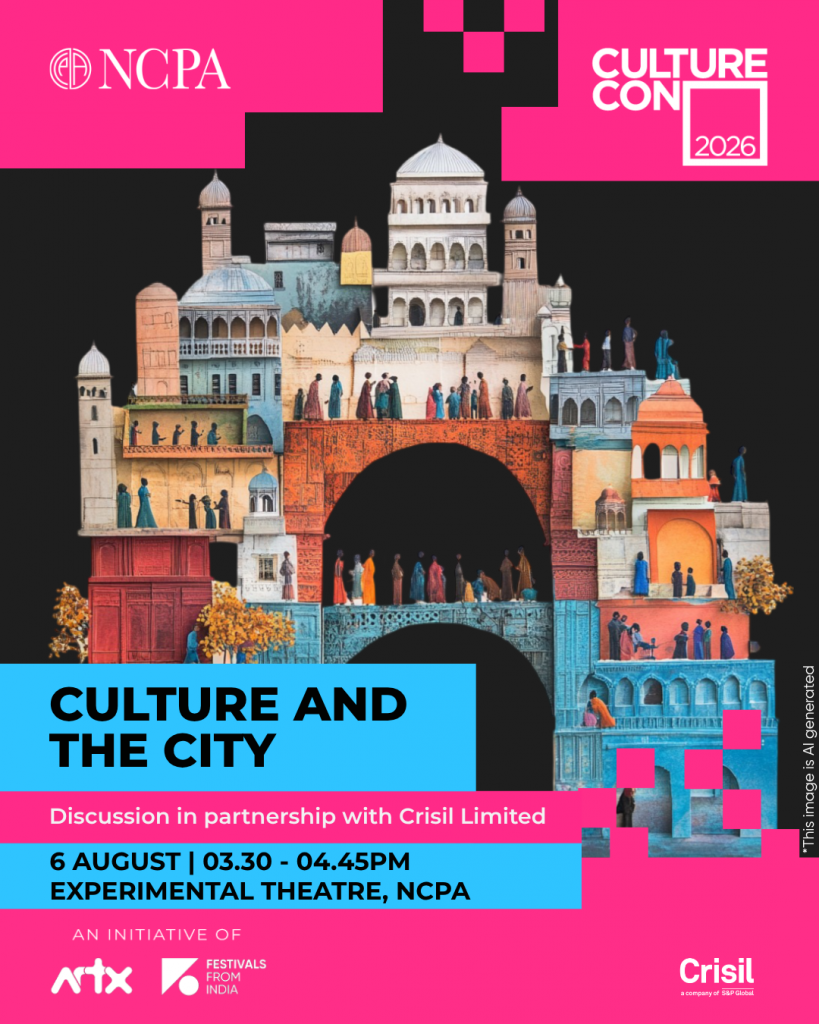
Among this year’s conversations at CultureCon is Culture & the City, presented by Crisil Limited—a session that asks an important question: What actually makes a city culturally alive?
We often compare cities over food, transport, history or quality of life. But beneath all those conversations lies something bigger: culture. It shapes how we experience our cities, influences who chooses to live and work in them, and determines whether creative communities can truly thrive.
For Priti Arora, President & Business Head, Crisil Limited Intelligence, understanding culture begins with measuring it. “For nearly four decades, Crisil Limited has worked to make markets function better through actionable insights, benchmarks, solutions and consulting services. We are bringing that expertise to the arts and culture ecosystem as a knowledge partner for CultureCon 2026. After all, what gets measured gets managed.After all, what gets measured gets managed. Culture shapes how cities live, grow and compete, yet its value is rarely quantified. At Crisil Limited, we are applying our renowned analytical rigour to measure culture’s impact on urban performance. Cities are markets of people, ideas, businesses and culture. By helping cities measure culture’s contribution, we can enable smarter decisions, attract investment and create lasting value.”
Bringing together leaders from government, cultural institutions and the creative industries, this session explores how cities can intentionally build creative ecosystems instead of leaving them to chance.
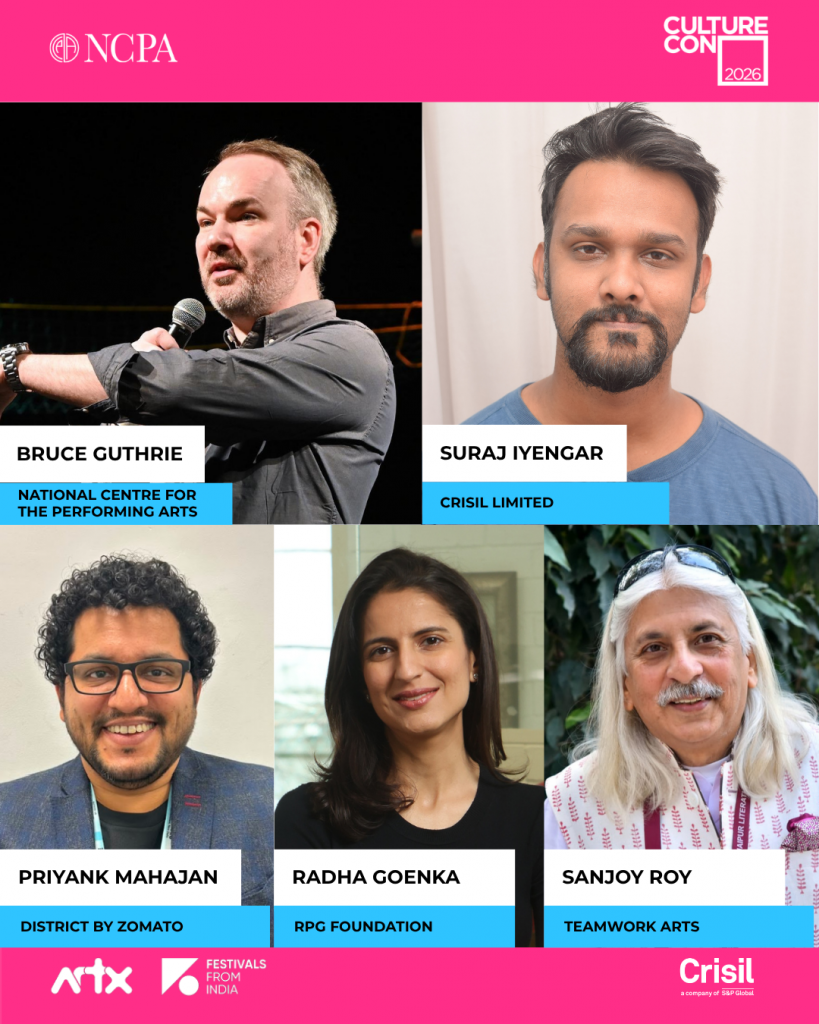
Ahead of the session, we spoke with Suraj Iyengar, Director & Practice Leader – Consulting at Crisil Limited, who will moderate the discussion featuring Bruce Guthrie, Radha Goenka, Priyank Mahajan, Sanjoy Roy and other leaders shaping India’s cultural landscape.
When we talk about investing in a city’s future, creative infrastructure rarely enters the conversation. What does “creative infrastructure” actually mean to you, and why should governments, businesses, and institutions care about it?
Creative infrastructure is that which nurtures opportunities for us to discover, produce, present and exchange ideas. This not only includes museums, art galleries, performance venues, public art and built heritage spaces, but also art schools and residencies, art studios, workshops, archives and libraries for art education and its practice. In addition, cities also need the policy and institutional infrastructure to program these and mobilize resources to sustain them.
We need to consciously invest in creative infrastructure not only for the social but also economic benefits. These creative opportunities are what makes a city vibrant and innovative. In a world with an increasing mobile workforce, these attributes help cities compete for talent which is the critical resource for knowledge and high-value sectors of the economy. They also help in building a brand for the city to market itself to investors as well as tourists. There is, thus, a case for stakeholders across a board to focus on how we develop the creative infrastructure for our cities.
From Crisil Limited’s perspective, what role can data, planning, and long-term investment play in helping cities become more inclusive, vibrant cultural ecosystems rather than relying on organic growth alone?
There are three key aspects here.
- First, cities compete globally for creative investment and talent. To grow—and retain—their cultural ecosystems, they need to continuously assess where they stand.
- Second, market forces alone cannot create an inclusive cultural ecosystem. Commercial spaces naturally cater to audiences that can pay, while public and philanthropic investments are limited and often compete with more pressing needs.
- This is where data becomes critical. It helps identify gaps—whether artists lack studios and creative spaces, or communities have limited access to cultural programmes and venues. Tracking events, attendance and public perception also allows cities to benchmark progress and understand what works.
- Finally, building a creative city requires collaboration. Governments, philanthropies, the private sector and NGOs each bring different strengths. A shared long-term strategy can align these efforts, combining investment in cultural spaces with the institutions and funding needed to sustain them.
Looking ahead, what would success look like for Mumbai, or any Indian city; that consciously chooses to invest in culture? What changes would artists, creative professionals, and citizens actually experience?
Mumbai can aspire to be a globally preferred location for creative business’, professionals and artists of all kinds; one that consistently ranks high in global quality of life and tourist attractiveness rankings. Budding artists and professionals looking to experiment should reliably find affordable venues to practice and exhibit their work. Citizens should find opportunities to experience cultures from around the world as well as their local heritage. A city where art is not limited to the four walls of a venue but also thrives in its gardens and streets.
That sentiment is echoed by Rajatri Biswas, Manager – Arts, Culture & Heritage, Crisil Limited as well, who sees culture as the force that transforms cities into places people truly belong to.
“A city is more than its buildings; it is the people who imagine what can happen within them. Culture is what makes a place worth living in, not just living through, much like a performance that comes alive only when the audience enters the room. We see this transformation at festivals, where empty grounds become living, breathing spaces the moment people arrive. Crisil Limited is looking at cities through that same lens. Our partnership with CultureCon is about connecting with the creative ecosystem to help our cities come alive and feel more vibrant .”
Why this conversation matters
As cities grow, conversations around infrastructure can no longer be limited to roads, housing and transport. Culture is equally essential to building cities that are innovative, inclusive and resilient. Culture & the City brings together leaders from across sectors to explore how India’s cities can intentionally invest in creativity as part of their future.
Join us at CultureCon 2026
If you’re interested in the future of India’s cities, creative economy and cultural infrastructure, Culture & the City is a conversation you won’t want to miss.
Join us on 6–7 August at the NCPA, Mumbai. Get your tickets today
Want to know what all formats are there this year, check this blog out. Here is the full Programme of this edition
CultureCon is an initiative of The Art X Company and Festivals From India, in collaboration with the NCPA.