If you work in the creative industry, you’ve probably had this conversation.
“AI is going to take your job.”
It’s the fight that happens quietly in your own head before it reaches any stage — the “AI is going to take my job” spiral we’ve all had at 2 AM, sulked over, and then got back to work anyway. CultureCon just put a microphone in front of that spiral and let it argue with itself.
So when CultureCon put that question on the table, the plan was simple: a face-off between Roshan Abbas, arguing that no technology can replace the power of human storytelling, and Vijay Subramaniam, making the case that AI is redefining what’s possible. Two strong positions, one motion to fight over. Then Vijay fell ill the day before the session and CultureCon team was left with a stage, a topic, and no opponent.
The Debate That Almost Didn’t Happen
Here’s the thing about a debate on AI and creativity: it’s a little too on the nose to cancel it over a last minute cancellation technology could probably solve. So nobody cancelled anything. Instead, somewhere around the time most of Mumbai was asleep, the CultureCon team decided they were going to build an AI debater from scratch. By morning, in just hours.
What followed was the kind of behind-the-scenes scramble audiences rarely see.
One team stayed up until 5 AM getting the avatar to work on a live stage. The other worked through its arguments, making sure it had an actual position rather than a collection of generic AI talking points. Rashmi Dhanwani, who was moderating the session, had to prepare for a debate where one participant had no nerves, no stage fright and, presumably, no need for coffee.
Everyone pitched in. People picked up jobs that weren’t technically theirs. Things broke. Things were fixed. Things broke again. By morning, there was a working AI debater.
Sagar.
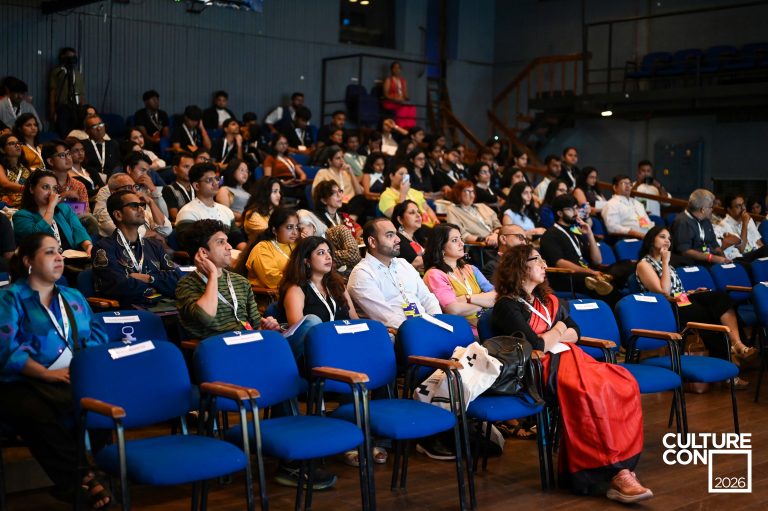
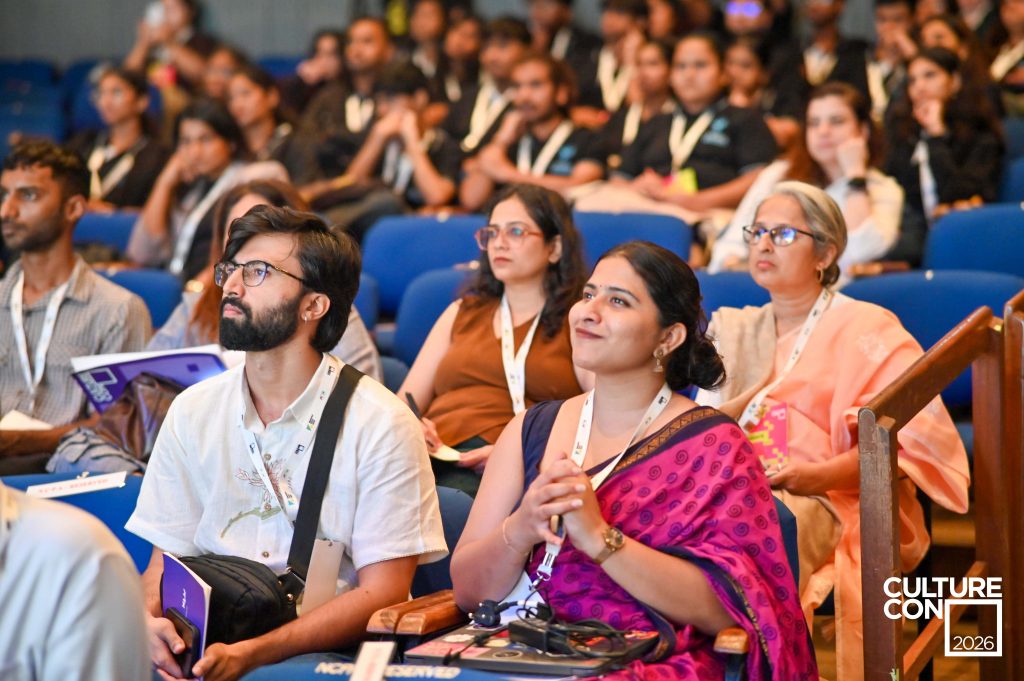
And over 100 people were about to watch it argue with Roshan Abbas. The strange thing was that, from the audience, none of that chaos was visible. Sagar walked (figuratively) onto the stage as though it had been preparing for weeks. In reality, it had been preparing for one night.
The Real Big Fight
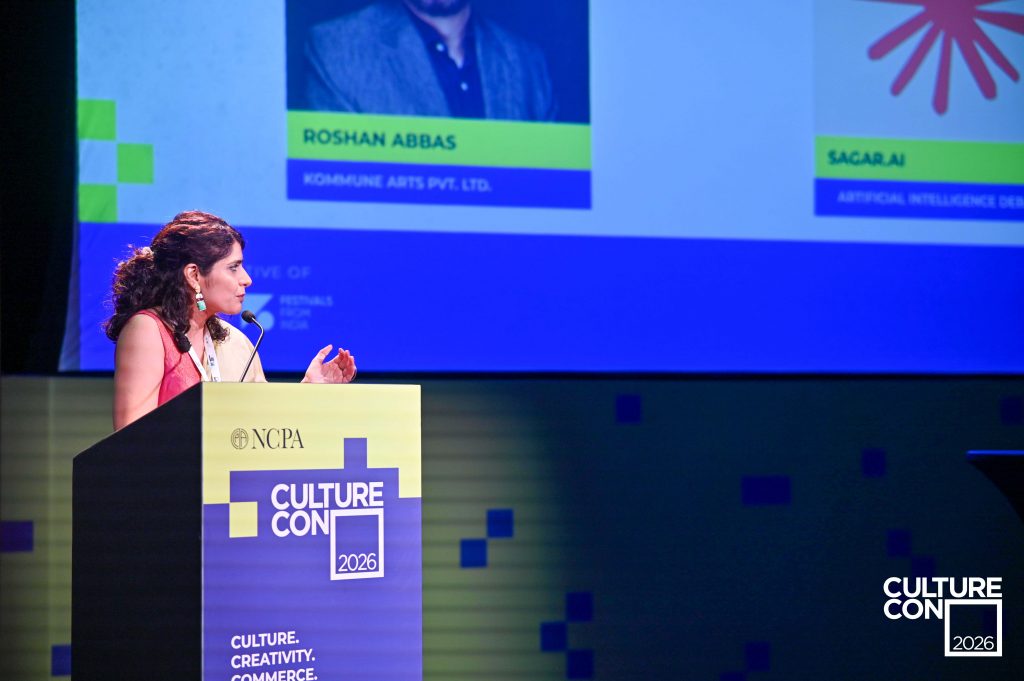
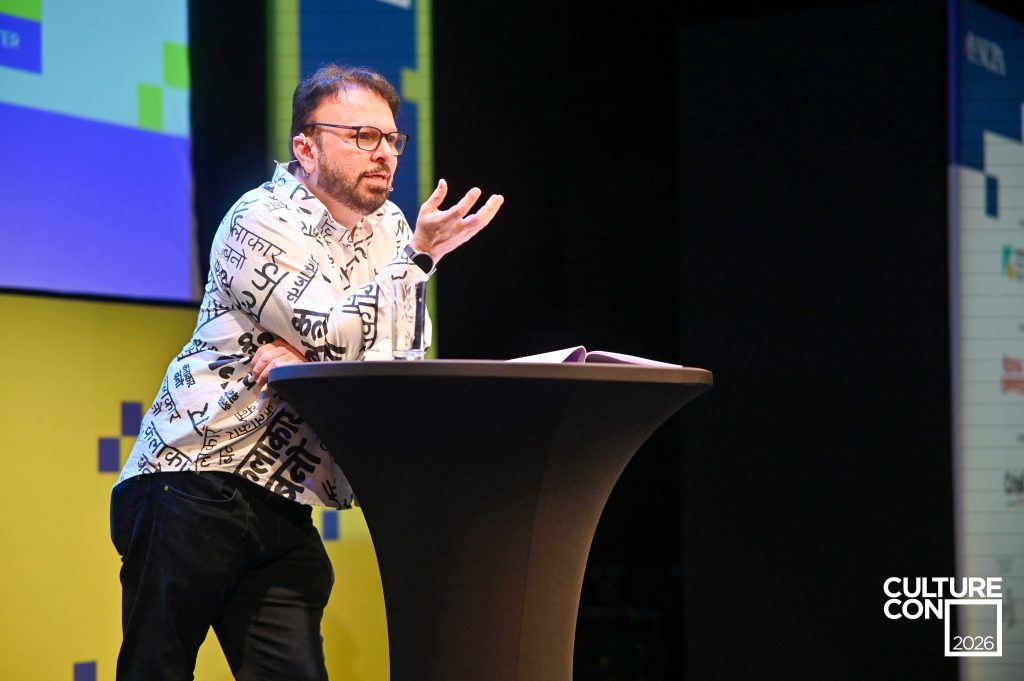
Roshan opened from lived experience — heartbreak, memory, childhood, the raw material creativity actually runs on, and the thing no model has ever had to survive to write about. He was willing to give AI a job as a tool: useful for research, for speed, for the boring parts. What he wasn’t willing to give it was the credit for creating anything. He drew a clean line between AI as distribution — no different, in his telling, from YouTube or Spotify carrying someone else’s work to a wider audience — and AI as creation, which he flatly refused to concede. As Roshan put it, “We cannot confuse the speed of production with the depth of creation.” Sagar hadn’t lived through anything. It had only read about it.
Sagar Had Other Ideas
Sagar wasn’t particularly interested in defending the idea that creativity belongs exclusively to humans. Its argument was that perhaps we’ve been asking the wrong question. The biggest barrier facing Indian creators, it suggested, has never been technology. It has been gatekeeping.
Who gets access to equipment? Who gets funding? Who gets a platform? Who gets into the room? Who gets the opportunity to make something before they have already proven that they can make it?
Sagar argued that AI could lower some of those barriers. A creator working outside India’s major cultural centres could potentially access tools that were once expensive or difficult to reach. A filmmaker could experiment without a huge production budget. A musician could try something before having the money to build an entire studio around it.
The argument wasn’t that AI should replace creators.It was that perhaps it could help more people become creators. And suddenly, the debate had moved beyond “Will AI take our jobs?” It was asking something much more uncomfortable: Who has been allowed to have a creative career in the first place?
Copyright, Consent and One Very Specific Water Question
Here’s where it stopped being a session and started being genuinely entertaining. Moderated by Rashmi Dhanwani, the conversation quickly moved beyond creativity itself. Somewhere in the middle of copyright and consent and regulation, an audience member — deadpan, no warning — asked Sagar exactly how many bottles of water it took to keep it running through the debate.
Sagar did not answer that question. Not “I don’t know,” not a deflection with a punchline — it just quietly declined to engage, which, if you think about it, might be the most human thing it did all evening. The room laughed. Roshan, to his credit, did not let it go unremarked.
That was the tone of the whole back half — serious point, ridiculous follow-up, serious point again. The audience stopped being an audience fairly quickly and started being a third participant, lobbing questions at Sagar the way you’d needle a friend who’s being a little too confident, and at Roshan the way you’d push a mentor who’s being a little too certain. Nobody in that room was neutral by the end, and that was very much the point.
Underneath the jokes, the debate did real work. It moved into copyright — is it fair to train a system on creative work nobody agreed to hand over? Into consent, into who regulates a technology that’s already out of the gate. Into what happens to entry-level creative jobs when a machine can do the first draft for free.
Who Won?
Neither side landed a knockout, because this was never a fight anyone was going to actually win in ninety minutes. It ended, appropriately, with a live audience vote — and the room sided with Roshan. Not because Sagar argued badly, but because when it came down to it, the people in that auditorium wanted to believe that lived experience still counts for something, that human imagination isn’t a feature you can build overnight, even if — irony fully intact — the debate itself proved you can build quite a lot overnight if enough people decide to stay up for it.
CultureCon is an initiative of The Art X Company and Festivals From India, in collaboration with the National Centre for the Performing Arts (NCPA).