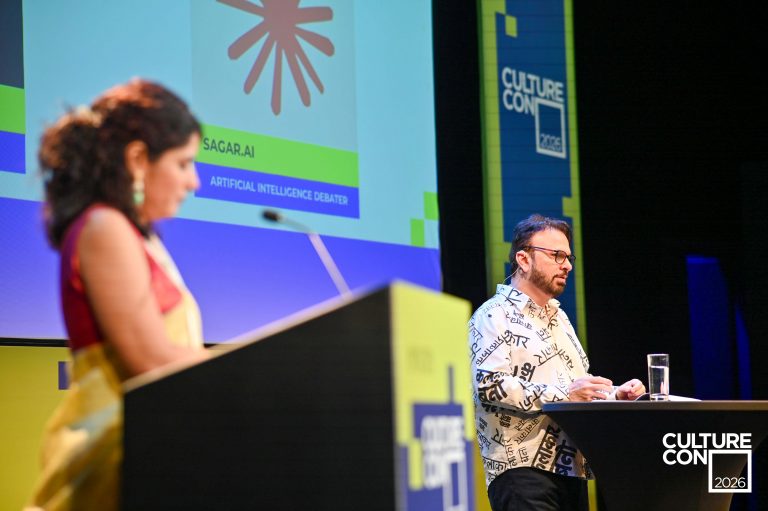
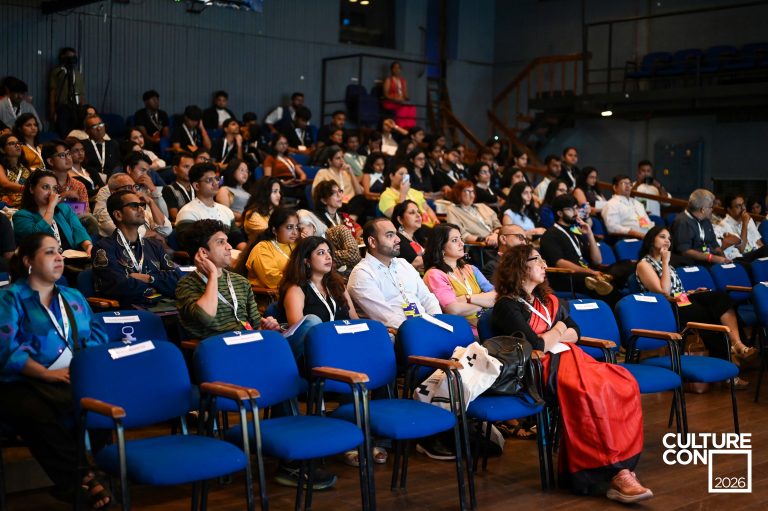
Most conferences follow the same script. A moderator asks a question, five speakers answer it in turn, time runs out before the room gets a real exchange, and someone squeezes in one audience question before the applause. People leave with a notebook full of quotes they’ll never open again.
However at CultureCon 2026 we are doing it differently! This year’s formats ask something different from the room: participate, challenge ideas, learn a skill you can use the next morning, meet someone who can actually change the shape of your career. Building India’s creative economy is not a spectator activity, and CultureCon’s formats are designed around that.
Learn from people doing the work, not talking about it
Some ideas need uninterrupted space to land. The Keynote slot gives one speaker 25 to 30 minutes with no moderator and no debate — one bold idea, explored in full, setting the tone for everything that follows in that block.
The Masterclass picks up where the keynote leaves off. These are practitioner-led sessions built around a specific, usable outcome — a framework, a template, a skill — rather than inspiration for its own sake. You leave with something you can apply, not just something you agreed with.
Conversations that go somewhere, not networking that goes nowhere
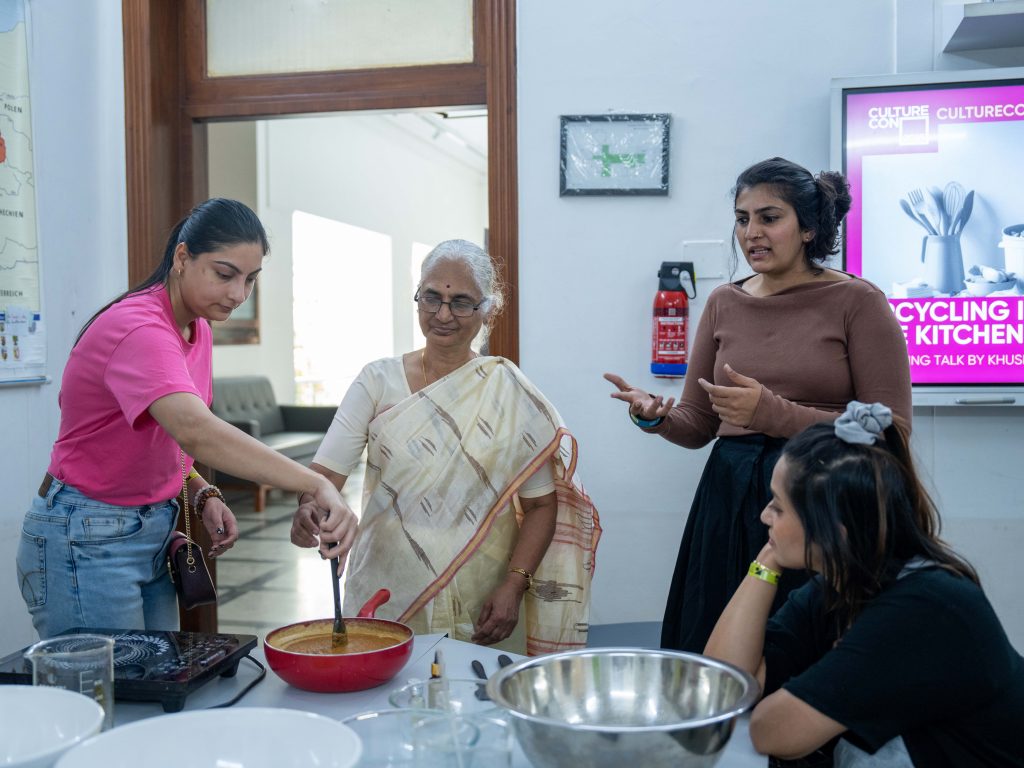
Everyone has a drawer of business cards attached to no memory. CultureCon’s Mentorship Lab is built against that: delegates rotate through timed conversations with practitioners and mentors, in one on one set up that the exchange stays real. It’s speed-dating in structure, but the questions are the ones you actually came with.
The Closed Door Workshop takes that further. Capped at 20 to 25 people, invitation-only, facilitated rather than presented — participants work through a structured agenda and leave with something built together: a decision guide, a shared framework, a commitment the room actually made.
Formats that refuse to sit still
A few sessions exist specifically to break the rhythm of a normal conference day.
Pecha Kucha forces discipline: a fixed run of slides, auto-advancing whether the speaker is ready or not, with no room for padding. Lightning Talks cut it down further — five to ten minutes, one sharp point, no preamble. Teach the Room narrows the brief again: each speaker hands over one hard-won, counterintuitive lesson, not their life story. The best insight in the day sometimes takes seven minutes to say.
You’re not watching the conversation. You’re in it.
At most conferences, the audience listens. At CultureCon, the Fishbowl puts an empty chair inside the speakers’ circle — anyone in the room can walk up, take it, say their piece for a minute or two, and hand it back. The session ends with a commitment round, where names are taken against whatever the room has decided to act on.
The Unconference goes further still: no fixed agenda, no pre-selected speakers. Delegates propose the topics live, the room votes, and the session is built on the spot around what people actually want to talk about. Some of the best ideas in the building never start on a stage.
Evidence first, opinion after
A handful of sessions are built to start with data rather than debate. In Discussion format opens with research or sector statistics — the numbers are the provocation, and practitioners respond to them, not the other way around. The Infrastructure Audit works the same way for a city, a system, a piece of creative infrastructure: evidence first, so the conversation that follows has somewhere real to stand.
Different formats, different arguments
A few sessions exist specifically to unsettle the usual shape of a panel. Myth Busting takes a belief the sector holds as fact and takes it apart, plainly, with evidence or lived experience. Reverse Pitch inverts the usual power in the room — speakers from underrepresented contexts bring a genuine question to the floor, and it’s the audience that has to answer well. In Conversation strips things back to two or three speakers and a set of chairs, no panel table, no formal moderator — closer to a real conversation than an interview.
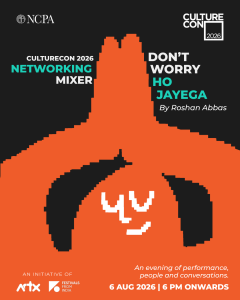
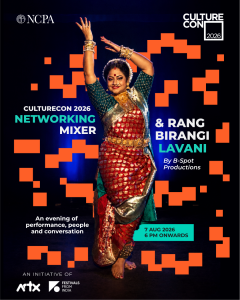
The conversations continue long after the last session ends. Through two curated evening mixers, CultureCon 2026 brings the community together beyond the conference rooms. One evening features the premiere of Don’t Worry, Ho Jaayega, where Roshan Abbas shares stories from a lifetime of building unforgettable experiences in India’s events industry, followed by networking over drinks. On another evening, Rang Birangi Lavani reimagines a centuries-old performance tradition through stories of queerness, love, longing and identity, inviting delegates to experience culture through performance and conversation. At CultureCon, some of the most meaningful connections happen away from the stage—over a shared performance, a drink, or an unexpected conversation that stays with you long after the event.
CultureCon 2026 isn’t trying to fit more speakers onto a stage. It’s trying to change what happens when a room full of creative people gets together — so people leave with a framework instead of a buzzword, a collaborator instead of a business card, and maybe the beginning of their next project instead of a full notebook they won’t reopen.
That’s the room CultureCon 2026 is building. Come sit in it — or better, come take the chair.
Read the full schedule here. If you are feeling still confused here are more reasons for you to attend CultureCon 2026 and if you are coming to Mumbai for the conference you should definately check this essential Mumbai Guide for Culturecon 2026
Click and book your tickets today
Click here to read more articles on festivals in India