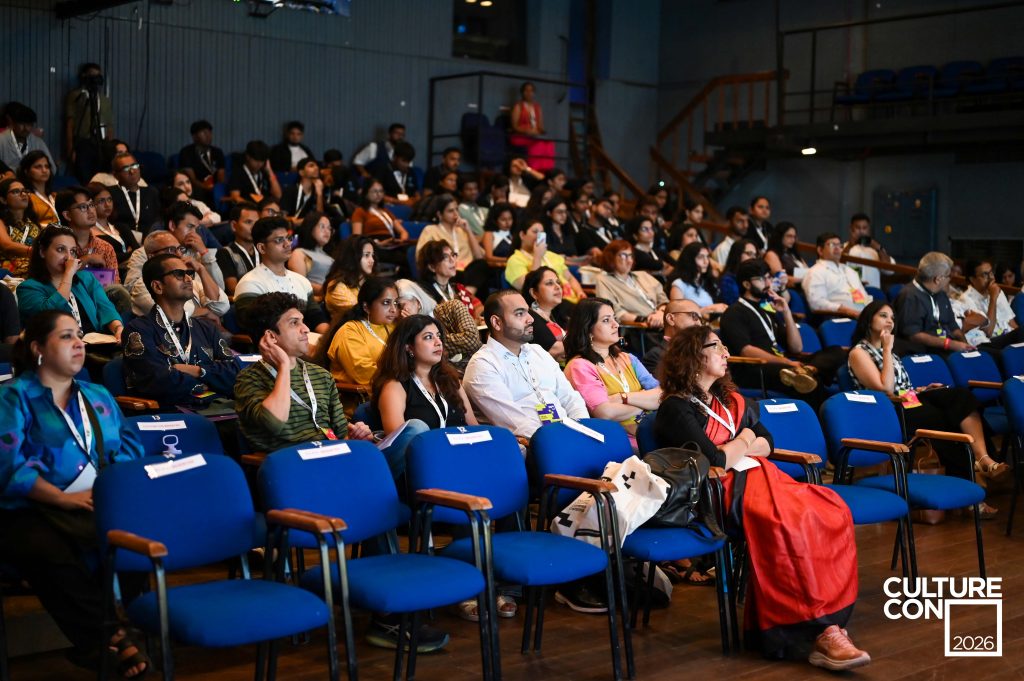
CultureCon 2026 closed its fourth edition at the NCPA, Mumbai, on 6 & 7 August, two days that turned into a season’s worth of conversations, and a debate that nobody in the room is done talking about yet.
We spent the last month building up to this: unpacking the conference formats, walking readers through why the sector needed to show up, dropping the full schedule, sending people around the city, and sitting down with Suraj Iyengar to talk about what creative infrastructure actually means before his session. Now that it’s over, here’s what happened when all of that came alive in one building.
The Big Fight, and the Hard Questions
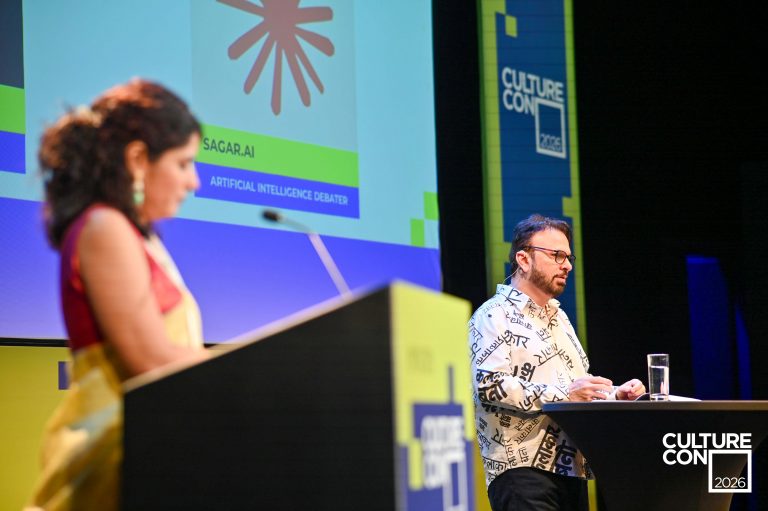
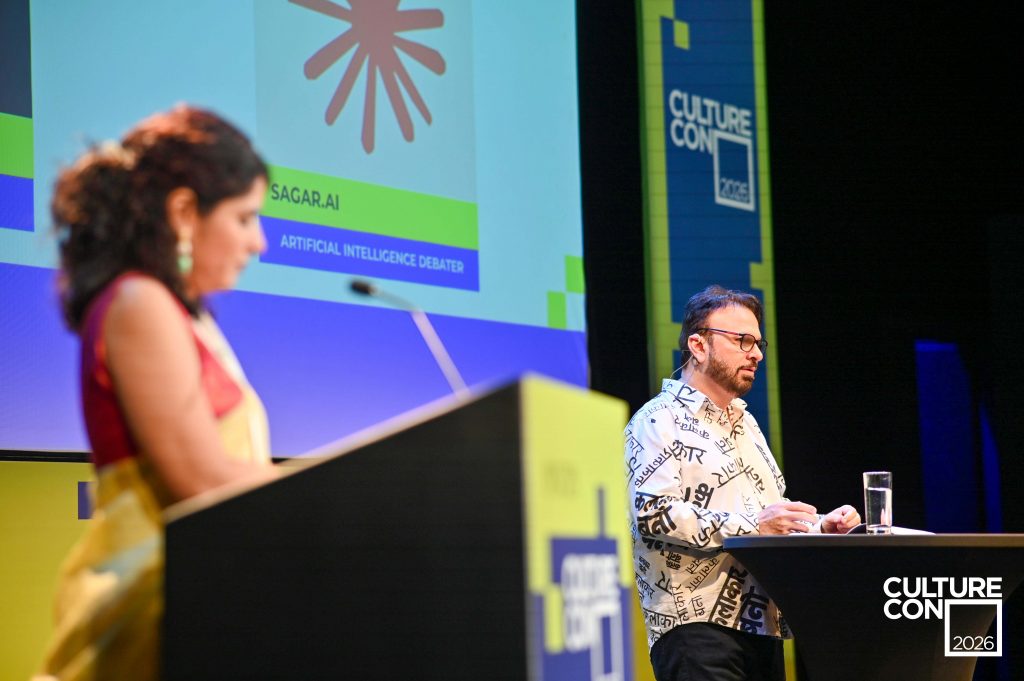
If one session is going to follow CultureCon 2026 into every WhatsApp group and green room for months, it’s The Big Fight: AI and the Future of India’s Creative Economy — where Roshan Abbas found himself debating Sagar, an AI avatar the team built overnight after his original opponent fell ill. What started as a scheduling crisis turned into the most highlight of this year’s conference.
Read the full story behind The Big Fight — how an overnight scramble turned into one of CultureCon’s most unexpected moments.
The Keynotes That Set the Terms
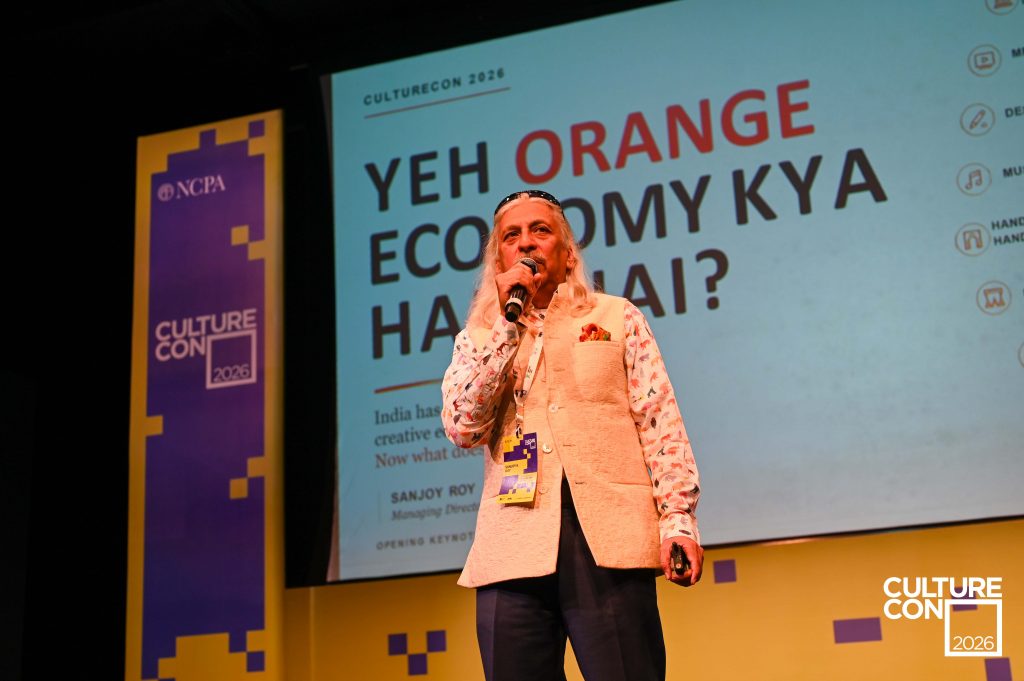
CultureCon 2026 opened by naming the thing everyone in the sector talks around but rarely names outright: money. Yeh Orange Economy Kya Hai Bhai, Sanjoy Roy’s keynote, unpacked what India’s new policy language around the creative economy actually means for the people building it on the ground, not the ones drafting the policy. On Day 2, Ashish Kulkarni followed with Skilling for the Creative Economy: What India Got Right, What It’s Still Getting Wrong, a three-decades-deep look at what it would take to formalise the roughly ten crore livelihoods that make up India’s creative economy today, almost all of them built outside any formal education system.
What It Takes to Make Culture Happen
Some of the most meaningful conversations at CultureCon weren’t about the big, sweeping ideas. They were about the things that make a creative career possible in the first place.
Building A Music Venue Circuit brought Girish ‘Bobby’ Talwar, Shilpi Gupta, Dipti Rao, Rafael Pereira, Dev Bhatia and Jishnu Dasgupta together to ask a deceptively simple question: what would it take to make it easier for artists to actually tour, perform and build audiences across Indian cities?
As Bobby Talwar, Founder of Rebellion Management, told Radio & Music, “If we can bring every stakeholder to the table — from artists and venues to brands, platforms and policymakers — we can begin building the blueprint for India’s live music ecosystem.”
That is the kind of work that rarely gets talked about when we talk about the glamour of the creative industries. The venues, the pricing, the infrastructure, the people making the calls behind the scenes. But without them, the work doesn’t move.
Himanshu Vaswani’s Pricing Your Projects brought that question much closer to home. For many creative practitioners, figuring out what to charge can be just as difficult as doing the work itself. The session broke down scoping, costing, margins and that slightly terrifying moment when you finally have to send the quote.
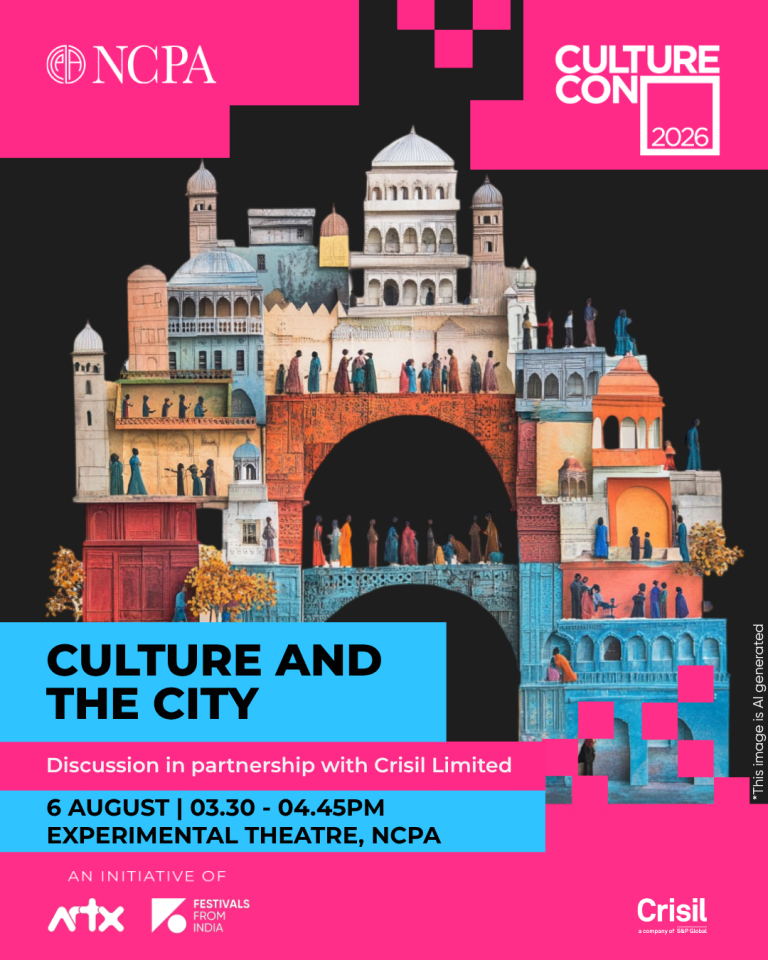
Culture & the City, presented with CRISIL, looked at the bigger picture: what does it take to build a city where culture can actually thrive? As Radha Goenka told Local Samosa, “Places like museums are where culture is consumed, but culture is made before that.” The spaces, systems and investment that allow that making to happen matter just as much.
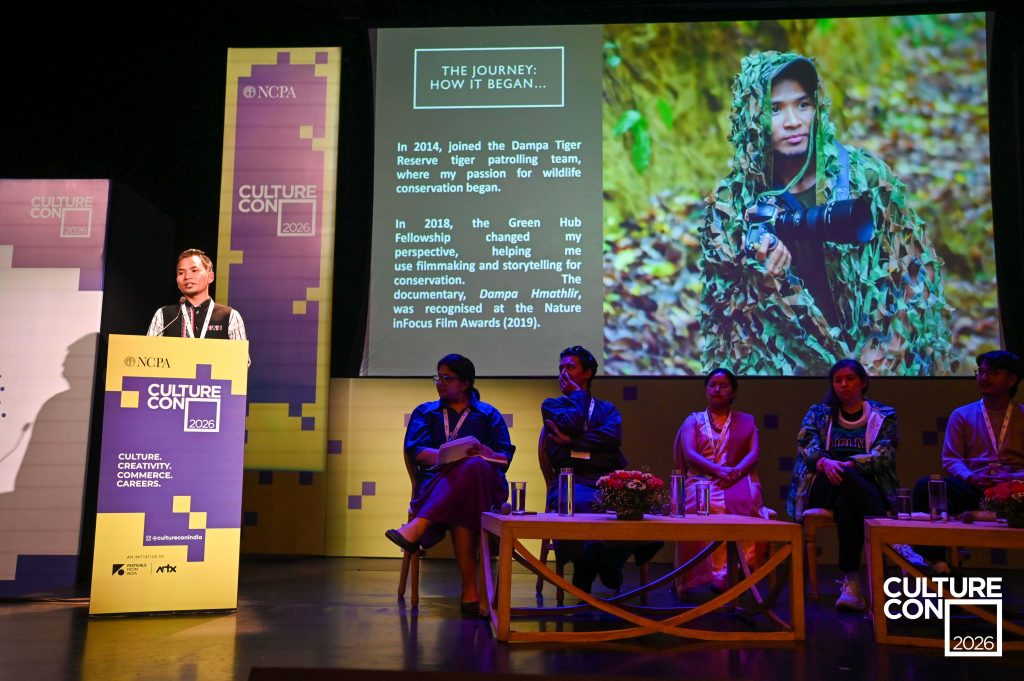
And Uncentered: Creative Economies Beyond the Metro, presented with Royal Enfield Social Mission and the Australian Consulate General Mumbai, reminded us that the creative economy doesn’t begin and end with Mumbai, Delhi or Bengaluru. Practitioners from Himachal Pradesh, Meghalaya, Ladakh, Mizoram and Australia brought questions from their own contexts — asking the room to look beyond the assumptions that usually shape conversations about creative work in India.
Then came Decoding Cultural Movements, where Karsh Kale and Shilpi Gupta turned the lens inward — towards the artist and the question of how you build a creative practice that can actually last. In his conversation with Homegrown ahead of CultureCon, Kale spoke about nearly three decades of experimentation, collaboration and reinvention, and the need to keep moving rather than simply repeating what has worked before. “It’s been about adapting and taking a broader view of what I do,” he said.
Then there was the Mentorship Lab, perhaps the simplest expression of what CultureCon is trying to build: one person sharing what they have learnt with another person who is just beginning. Across all these sessions, the questions were different, but the feeling underneath them was the same: How do we make it easier to do this work? How do we make it possible for an artist to tour? For a freelancer to know what their work is worth? For a city to make space for culture? For someone outside the metros to be seen?
These aren’t glamorous questions. But they are the ones that build an industry. And perhaps that is what stayed with us most from CultureCon: behind every piece of creative work we celebrate is an entire ecosystem of people, spaces, systems and relationships quietly making it possible.
The Evenings
The evenings had a rhythm of their own.
Before the performances began, the mixer gave everyone a chance to step away from the sessions and simply meet each other — speakers, delegates, mentors and fellow practitioners finding time to exchange notes, make introductions and, sometimes, start conversations that had nothing to do with the programme.
Roshan Abbas closed Day One with Don’t Worry, Ho Jayega, a solo, rollicking account of a lifetime spent building experiences in India’s live events industry. It was funny, chaotic and deeply personal — a fitting end to a day spent talking about what it takes to build a career in the creative economy.
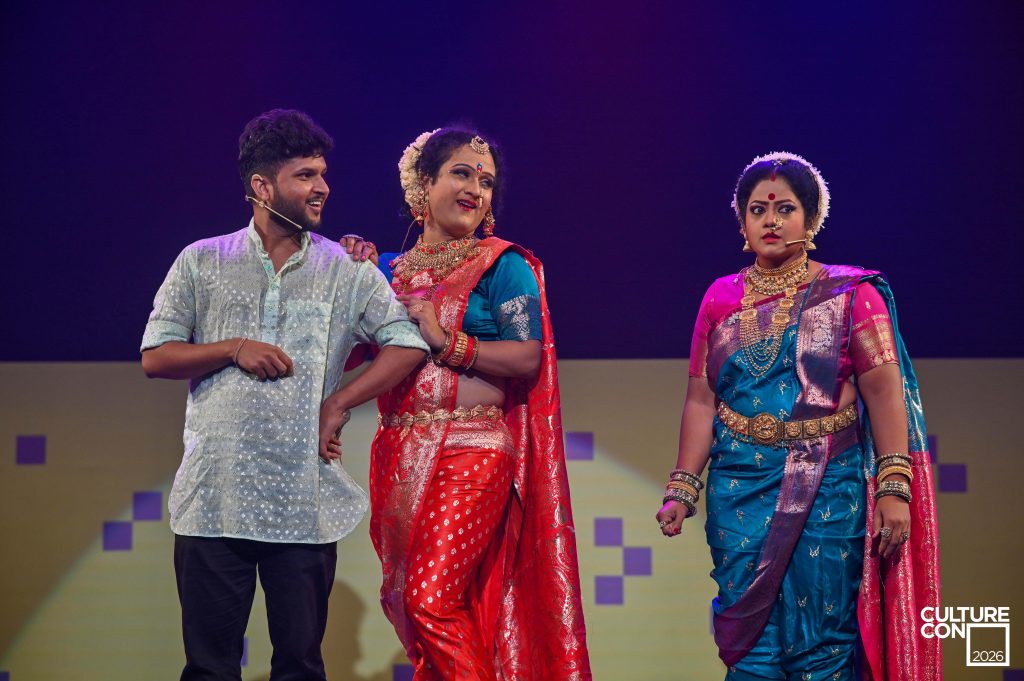
Day Two belonged to Rang Birangi Lavani, staged by B-Spot Productions. Drawing from Lavani’s long history across Maharashtra, including traditions of women performers and men performing as women — the three performers brought questions of gender, caste, class, desire and queerness into an immersive, interactive performance rooted in love, loss and longing.
It was loud, playful, political and tender all at once.
And perhaps these were the most CultureCon ways to end the two days: take a conversation about culture, give it a beat, make it twirl and let it move.
To Everyone Who Built This
CultureCon 2026 was built long before the doors opened at NCPA — in spreadsheets, hundreds of emails, late changes and the belief that putting the right people in one room could make something move. Thank you to the NCPA, our collaborator. To our partners and supporters, who backed the idea early. To every speaker and delegate who showed up ready to talk, exchange ideas and carry the conversation beyond the sessions . And to the CultureCon team, who spent months making two days look effortless — tired by the end, but it was worth every bit of it.
We left CultureCon with more questions than we came in with. About creative careers, infrastructure, technology, access, cities and what it will take to build a creative economy that works for more people. And perhaps that is a good place to end. CultureCon was never about the final word — just making room for the next one.
Two days are over. The conversations aren’t.
See you at the next one.
CultureCon is an initiative of The Art X Company and Festivals From India, in collaboration with the National Centre for the Performing Arts (NCPA).